Language

Security technology has advanced at a remarkable pace over the past decade, and the Electronic Lock has become the foundation of modern access control across residential, commercial, and industrial environments. Whether you are securing a hotel room, a factory production floor, or a private residence, selecting the right locking technology directly determines the level of protection, operational convenience, and long-term management cost you can expect. The three most widely deployed categories today are biometric locks, keypad locks, and RFID locks. Each operates on a fundamentally different verification principle, and understanding those differences is essential before making any purchasing decision.
This article draws on deep expertise in access control engineering and global security deployments to break down exactly how these three Electronic Lock technologies compare. We will examine their working mechanisms, hardware specifications, ideal use scenarios, and real-world performance trade-offs. By the end, you will have a clear, data-backed framework for choosing the right solution for your specific environment. Our team at Guangdong Zhengxin Intelligent Technology Co., Ltd. has spent years developing and refining all three lock categories, and the insights shared here reflect that accumulated technical and market knowledge.

Understanding the core verification mechanism of each lock category is the logical starting point. All three types belong to the Electronic Lock family, but they authenticate users through entirely different signal pathways. This affects response speed, error tolerance, infrastructure requirements, and vulnerability profiles in ways that matter enormously at scale.
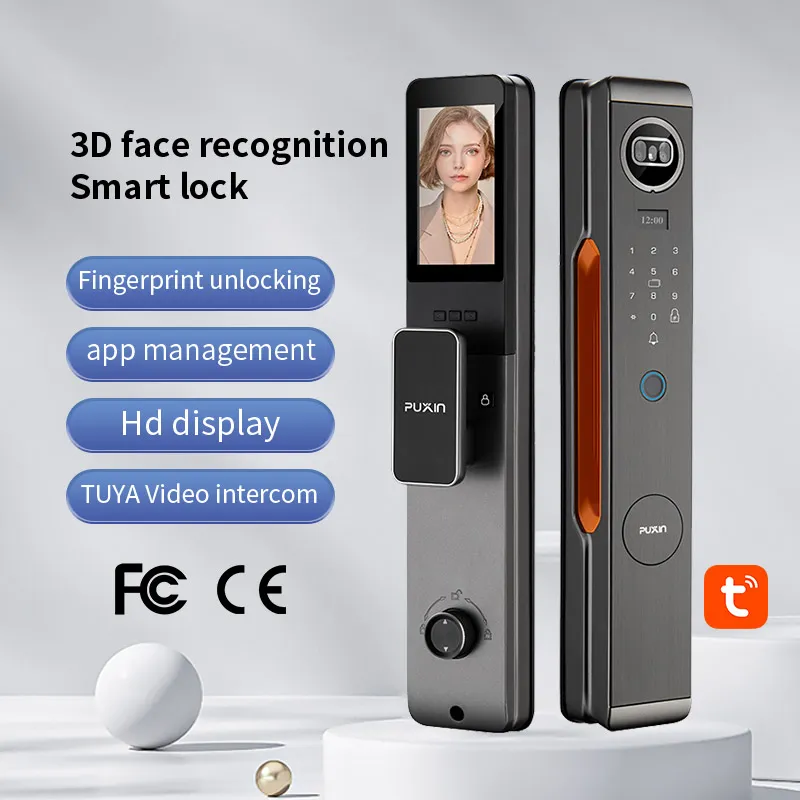
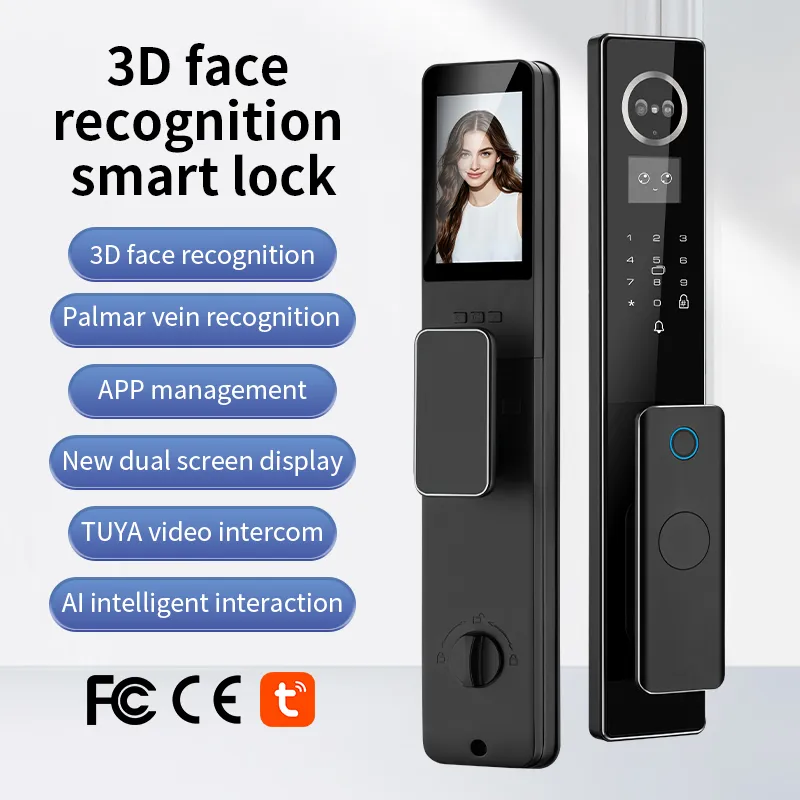
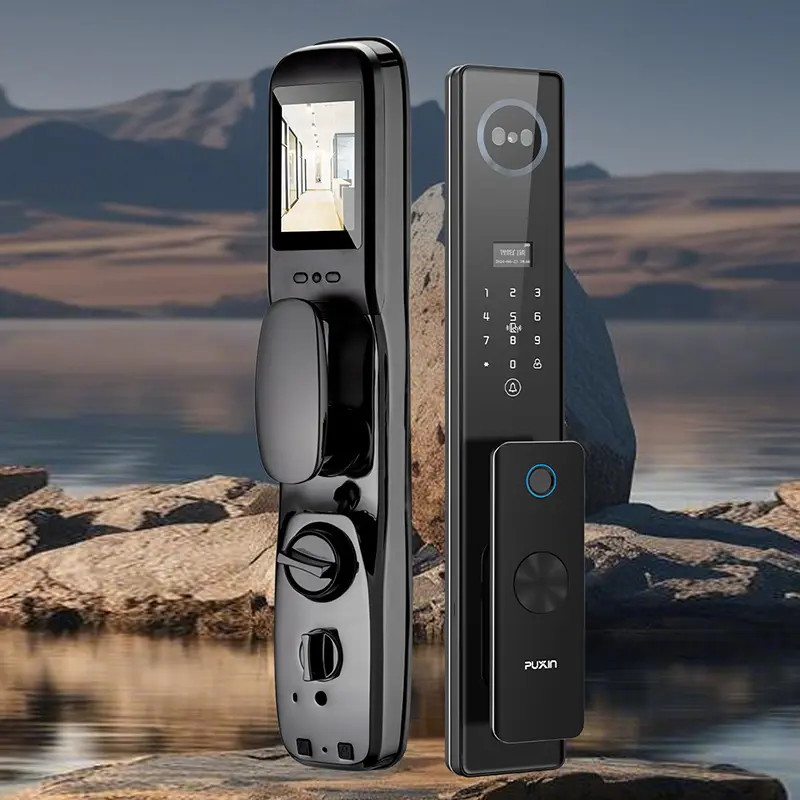
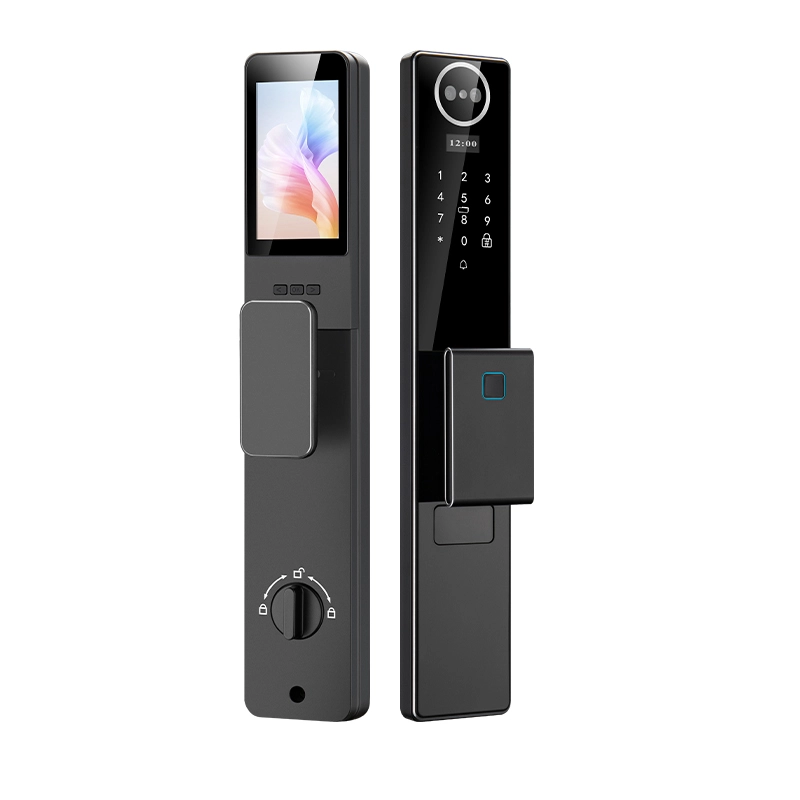
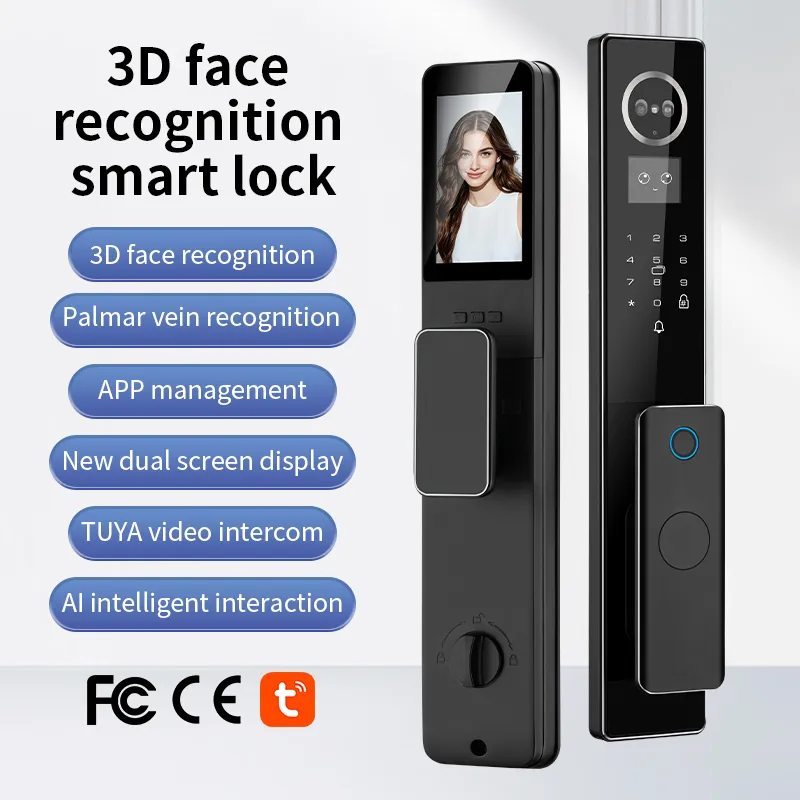
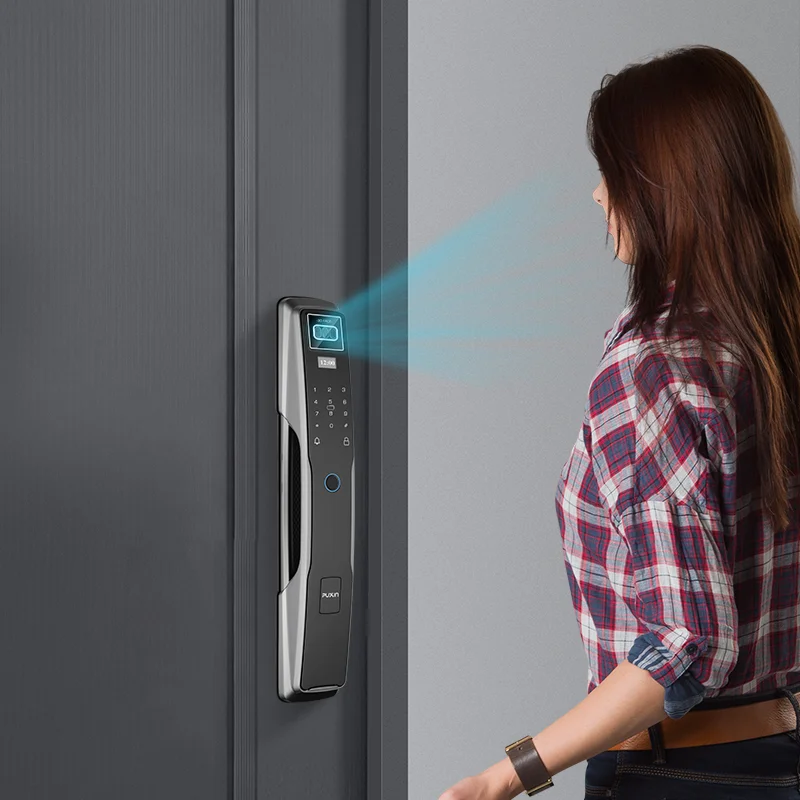
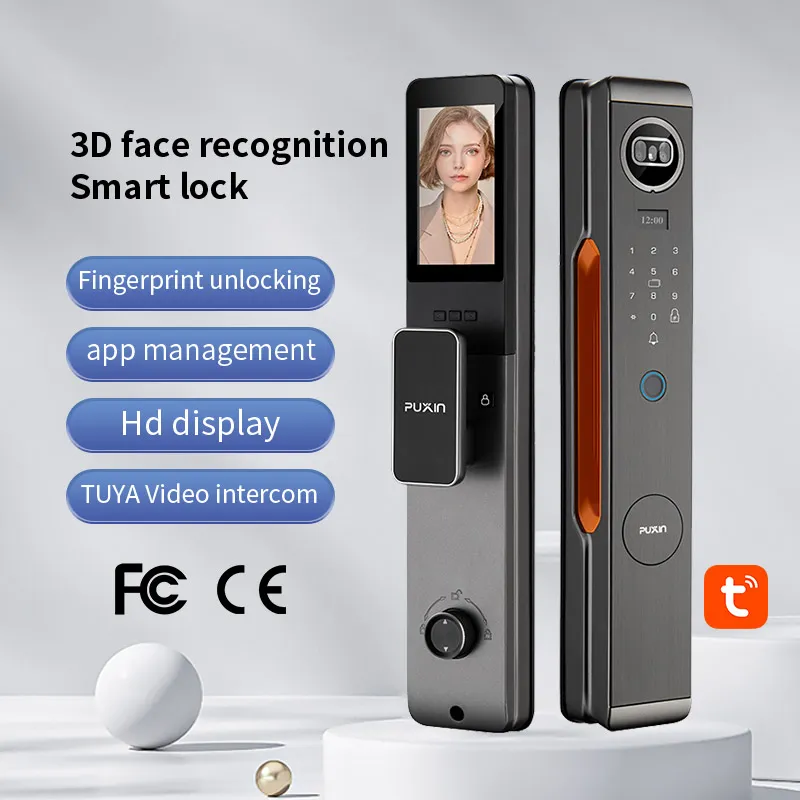
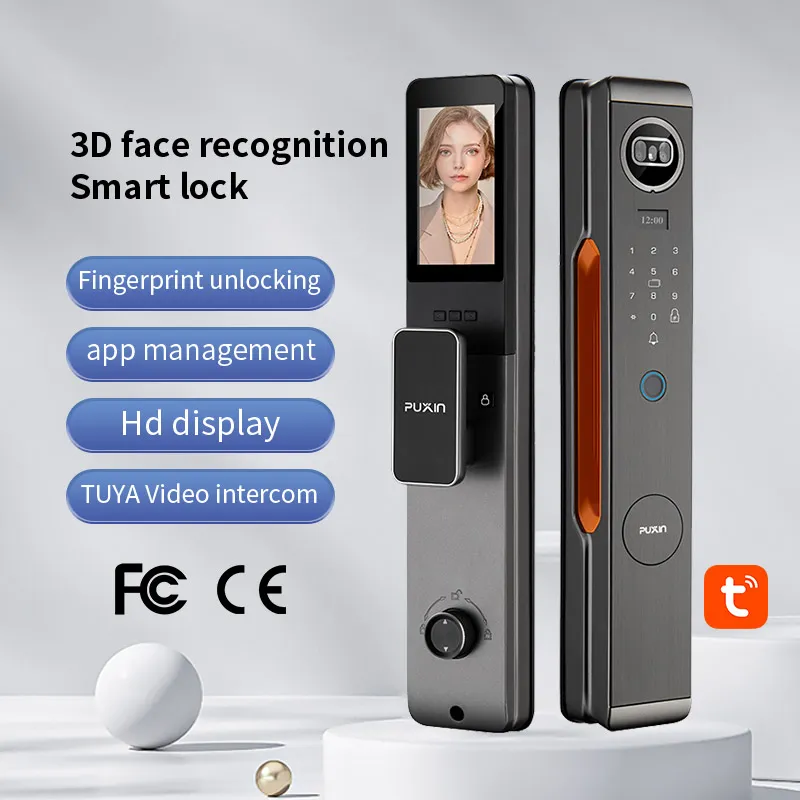
Biometric locks authenticate users by reading a unique physical characteristic. The most common modalities our factory currently produces include:
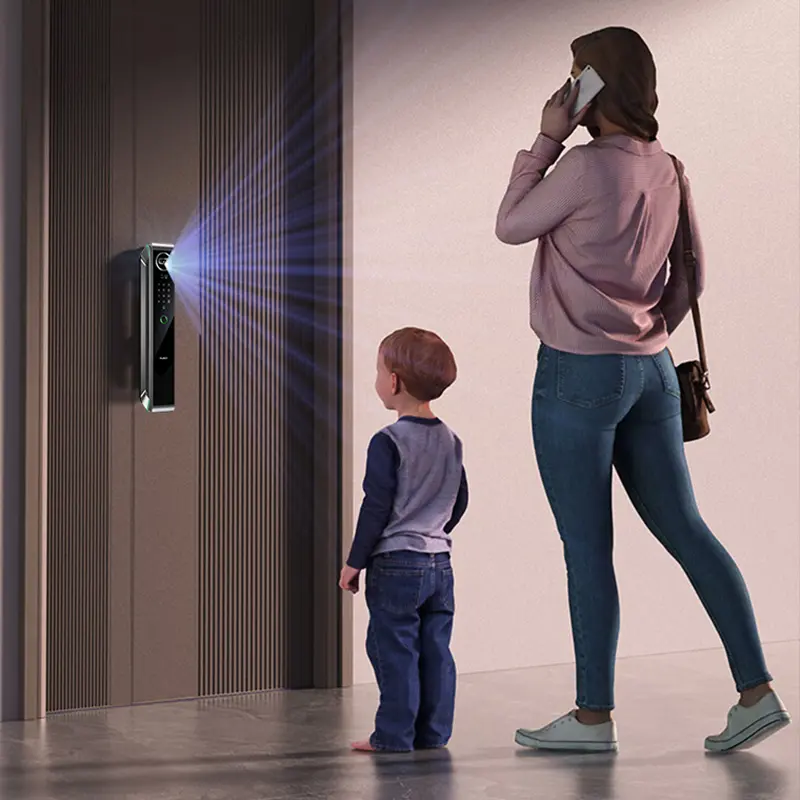
The lock captures a live biometric sample, converts it into an encrypted mathematical template, and compares it against stored templates in onboard memory or a cloud database. A match above the configured confidence threshold triggers the release mechanism. Our biometric Electronic Lock products process this entire sequence in under 0.5 seconds for fingerprint and under 1 second for facial recognition, ensuring that high traffic entry points do not create bottlenecks.
The defining advantage of biometric authentication is that the credential is inseparable from the person. It cannot be lent, stolen, or forgotten. However, sensor quality, environmental conditions such as lighting and humidity, and the size of the enrolled template database all influence false acceptance and false rejection rates. Guangdong Zhengxin Intelligent Technology Co., Ltd. addresses this by equipping our biometric locks with dual-sensor redundancy and adaptive algorithm updates delivered via OTA firmware.
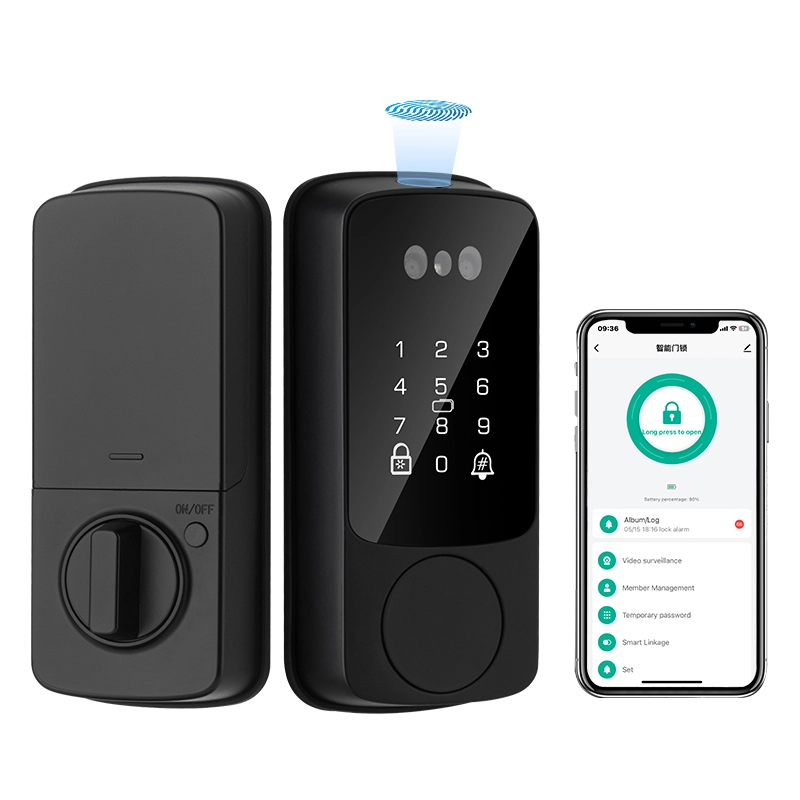
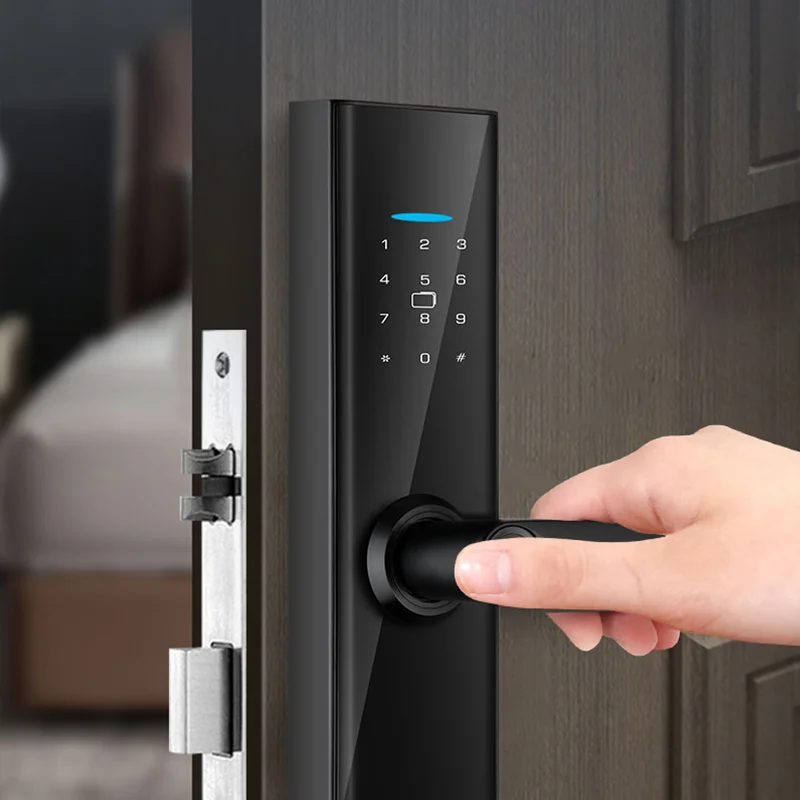
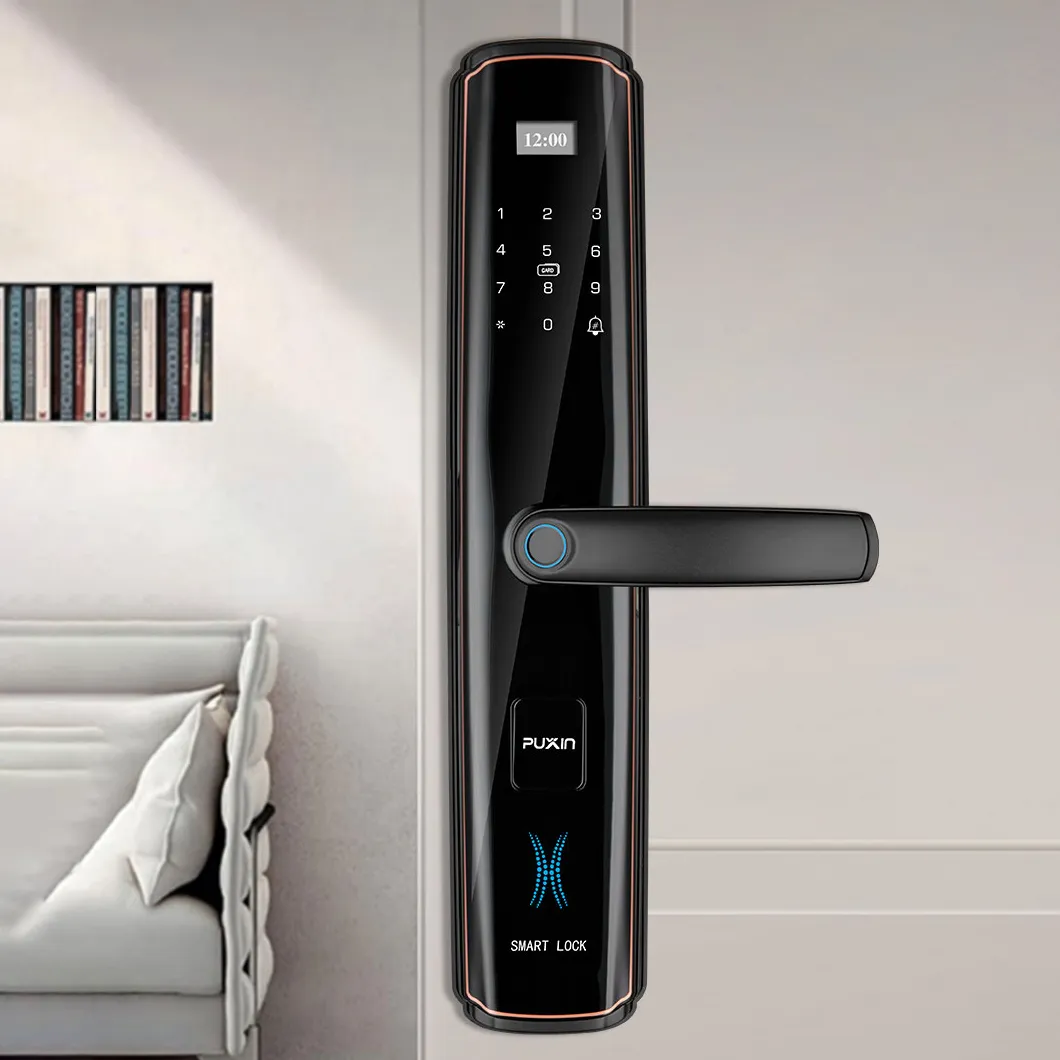
Keypad locks require users to enter a numeric or alphanumeric PIN code to gain access. Entry-level models use a static 4 to 6 digit code, while advanced models support dynamic codes, one-time passwords, and time-limited access codes generated through a connected mobile application. Our keypad Electronic Lock range supports PIN lengths from 4 to 12 digits and includes anti-peep scramble technology that randomizes the position of displayed numbers on each use, defeating shoulder-surfing attacks.
Key operational characteristics include:
RFID locks authenticate users through radio-frequency identification. The lock contains a reader that emits a radio frequency field. When a compatible credential, typically a card, fob, wristband, or mobile NFC device, enters the field, it transmits a unique identifier. The lock's controller validates this identifier against an access list and actuates the latch if authorized.
Our RFID Electronic Lock products support multiple frequency standards:
For high-security environments, Guangdong Zhengxin Intelligent Technology Co., Ltd. recommends MIFARE DESFire EV3 credentials, which incorporate mutual authentication, anti-cloning protection, and encrypted communication between card and reader to prevent relay attacks.
Specification comparison is where procurement decisions are won or lost. The table below consolidates the primary technical parameters our factory publishes for our current product lines across all three Electronic Lock categories.
| Parameter | Biometric Lock | Keypad Lock | RFID Lock |
| Authentication Method | Fingerprint / Face / Palm / Iris | PIN Code (4-12 digits) | Card / Fob / NFC / Mobile |
| Verification Speed | 0.3 - 1.0 seconds | 1 - 3 seconds | 0.1 - 0.5 seconds |
| User Capacity | Up to 10,000 templates | Up to 500 codes | Up to 100,000 cards |
| False Acceptance Rate (FAR) | Less than 0.001% | N/A (code-based) | Near zero with encrypted cards |
| Operating Temperature | -20 degree C to +60 degree C | -30 degree C to +70 degree C | -30 degree C to +70 degree C |
| IP Rating | IP65 | IP65 / IP67 | IP66 / IP68 (model dependent) |
| Power Supply | 12V DC / 4 x AA backup | 12V DC / 9V battery backup | 12V DC / PoE / Battery |
| Communication Interface | Wi-Fi, Bluetooth, RS485, Wiegand | Wi-Fi, Bluetooth, Wiegand | RS485, TCP/IP, Wiegand, OSDP |
| Locking Mechanism | Electric strike / Magnetic / Deadbolt | Electric strike / Deadbolt | Electric strike / Magnetic / Deadbolt |
| Anti-Tamper Alarm | Yes | Yes | Yes |
| Access Log Storage | Up to 100,000 records | Up to 50,000 records | Up to 500,000 records |
| Typical Application | Office, factory, residential | Rental, hospitality, residential | Enterprise, parking, large facility |
These specifications represent our standard production configurations. Custom parameters including higher IP ratings, explosion-proof housings, and extended temperature ranges are available for project-specific requirements. Our engineering team at Guangdong Zhengxin Intelligent Technology Co., Ltd. provides full datasheet documentation for every SKU in our Electronic Lock catalog.
Matching lock technology to environment is as important as the technology itself. A biometric lock that performs perfectly in a climate-controlled office can underperform in an outdoor industrial setting with heavy machinery vibration and airborne contaminants. Similarly, an RFID system designed for a logistics warehouse would be unnecessarily complex for a small apartment building. Our factory's project experience across dozens of countries informs the guidance below.
| Environment | Recommended Lock Type | Primary Reason |
| Corporate Office | Biometric or RFID | Identity certainty and audit trail |
| Short-Term Rental | Keypad | Remote code management, no physical handover |
| Hotel / Hospitality | RFID | Rapid card issuance, PMS integration |
| Factory / Industrial | Biometric (Face) or RFID | Hands-free operation in harsh conditions |
| Data Center | Biometric | Non-transferable credential compliance |
| Residential | Keypad or Biometric | Convenience and cost balance |
| Parking / Vehicle Access | RFID (UHF) | Long-range, hands-free vehicle identification |
| Healthcare | Biometric (Contactless) | Hygiene compliance and identity certainty |
Security performance is multi-dimensional. A lock that is resistant to spoofing may still be vulnerable to relay attacks or power-cut bypasses. Evaluating security requires examining each threat vector independently and understanding how product engineering addresses each one. Our products are tested against the following primary threat categories before leaving our factory.
All three Electronic Lock categories in our product range incorporate:
As Electronic Lock systems connect to enterprise networks, cybersecurity becomes a hardware specification. Our connected locks implement:
Total cost of ownership is not just about the unit price of the Electronic Lock. Installation labor, infrastructure modifications, credential management, and ongoing maintenance all add up significantly over the product lifecycle. Our factory provides detailed installation guides, pre-wired cable harnesses for bulk orders, and remote commissioning support to minimize these costs.
| Maintenance Task | Biometric | Keypad | RFID |
| Credential Addition / Removal | Re-enrollment via app or admin panel | Code update via app or keypad | Card programming via management software |
| Lost Credential Response | Delete template, re-enroll user | Delete and reissue code | Blacklist card UID immediately |
| Sensor Cleaning Frequency | Monthly (fingerprint), Quarterly (face) | Minimal | Quarterly (reader surface) |
| Battery Replacement (standalone) | Every 6-12 months | Every 12-18 months | Every 12-24 months |
| Firmware Update Channel | OTA via app | OTA via app | OTA via management server |
PUXIN provides a 3-year warranty on all Electronic Lock hardware and offers annual maintenance contracts that include remote diagnostics, firmware management, and on-site support within agreed SLA windows for enterprise customers.
Procurement teams frequently focus on unit cost and underestimate the total cost of ownership over a 5 to 10 year deployment. Our factory's project data consistently shows that the cheapest unit at purchase is rarely the cheapest solution at the end of a full operational cycle. The following framework helps structure a fair comparison.
PUXIN offers project-based cost modeling for large deployments. Our sales engineering team works directly with procurement and facility management teams to build a 5-year TCO model that accounts for all variables specific to your site conditions, user volume, and integration requirements. Choosing the right Electronic Lock technology at the outset prevents costly rip-and-replace cycles further down the line.
Biometric, keypad, and RFID Electronic Lock technologies each represent a mature, well-engineered solution for a specific set of requirements. Biometric locks deliver the highest identity assurance and lowest long-term credential cost, making them the right choice wherever accountability and convenience must coexist. Keypad locks offer unmatched simplicity and remote manageability, making them the dominant solution for rental properties and low-complexity environments. RFID locks scale effortlessly to large user populations and integrate cleanly with enterprise infrastructure, making them the standard for hospitality, logistics, and institutional access control.
No single technology dominates every use case. The most successful deployments our factory has supported often combine two or all three technologies within a single facility, using each where its strengths are most relevant. What matters is matching the verification principle to the operational reality of your environment, your user behaviors, and your security obligations.
Our team at Guangdong Zhengxin Intelligent Technology Co., Ltd. brings deep product engineering expertise and real-world deployment experience across every major vertical. Whether you are evaluating your first Electronic Lock installation or upgrading a legacy access control infrastructure, our technical team is ready to provide product recommendations, specification documentation, and project-level engineering support. Contact us today to discuss your requirements and receive a customized solution proposal tailored to your exact application.
Get expert guidance from the team at Guangdong Zhengxin Intelligent Technology Co., Ltd. Our engineers are available to provide free technical consultation, product samples, and competitive project quotations for any scale of Electronic Lock deployment. Tell us your application, and we will find the right solution.
Request a Free ConsultationQ1: Can a single Electronic Lock door support biometric, RFID, and keypad authentication at the same time?
Yes. Many advanced Electronic Lock models, including several in our product range at Guangdong Zhengxin Intelligent Technology Co., Ltd., are engineered as multi-modal devices that simultaneously support fingerprint, RFID card, and PIN code authentication on a single reader unit. This configuration is particularly valuable in enterprise environments where different user groups have different credential preferences or where a secondary verification method is required as a backup. The access control software treats each credential type as an equal authentication pathway and logs all entries against the individual user record regardless of which method was used. Multi-modal locks are slightly more expensive than single-mode units but eliminate the need for multiple reader types on the same door, reducing installation cost and door hardware complexity.
Q2: How secure is a keypad Electronic Lock compared to a biometric lock when it comes to preventing unauthorized access by a known person?
This is one of the most important distinctions between the two technologies. A keypad Electronic Lock authenticates a code, not a person. This means that any individual who learns or obtains the PIN can gain access, whether that is a family member, a former employee whose code was not deleted, or someone who observed the code being entered. Biometric locks authenticate the physical characteristic of a specific enrolled individual, meaning the credential cannot be shared, transferred, or observed and replicated. For environments where accountability matters, such as server rooms, pharmacies, or facilities handling valuable assets, biometric authentication provides a materially stronger defense against insider threat and credential sharing. Keypad locks can be hardened with anti-peep scrambling, audit logging, and automatic lockout policies, but they fundamentally cannot guarantee that the correct person is the one entering the code. Biometric locks close this gap entirely.
Q3: What happens to an RFID Electronic Lock if an employee loses their access card or it is stolen?
The response to a lost or stolen RFID card is straightforward in a properly managed access control system. The administrator logs into the access management platform and blacklists the unique card identifier (UID) associated with the lost credential. From that moment forward, the card is rejected at every reader connected to the system, regardless of which door it is presented at. The speed of this response is critical: in a well-configured enterprise system, blacklisting takes under 60 seconds and propagates to all connected readers in real time over a network-connected infrastructure. A replacement card is then issued and programmed with the same access rights as the original. For systems using encrypted MIFARE DESFire EV3 cards, which our factory recommends for commercial deployments, the card cannot be cloned during the window between loss and blacklisting because the rolling key authentication prevents any reader from extracting usable credential data from the card even if a third party has physical possession of it.
Q4: Are biometric Electronic Locks compliant with data privacy regulations such as GDPR when deployed in Europe?
Biometric data is classified as a special category of personal data under GDPR and equivalent regulations in other jurisdictions. Organizations deploying biometric Electronic Lock systems in covered regions must meet specific compliance requirements including obtaining explicit informed consent from enrolled individuals, documenting the legitimate purpose and legal basis for biometric processing, implementing appropriate technical safeguards to protect template data, defining and enforcing data retention and deletion policies, and ensuring that template data is not transferred outside the European Economic Area without adequate protections. Our systems support GDPR-compliant architectures including on-device template storage where biometric data never leaves the lock hardware, encrypted template storage that prevents readable extraction even with physical access to the device, and automated deletion workflows triggered by user offboarding events. Organizations should engage their data protection officer before deploying any biometric system to ensure their specific implementation meets all applicable regulatory requirements in their operating jurisdiction.
Q5: Which type of Electronic Lock is the most cost-effective choice for a property manager running 50 short-term rental apartments?
For a short-term rental portfolio of 50 apartments, a smart keypad Electronic Lock is almost always the most cost-effective and operationally practical solution. The core operational requirement in short-term rental is the ability to create and communicate time-limited access codes to guests remotely, without any physical key handover or on-site staff presence. Smart keypad locks connected to a property management platform fulfill this requirement completely. Access codes can be generated automatically upon booking confirmation and expire automatically at checkout time, with no manual intervention required. RFID systems require card issuance and collection logistics that create operational friction in a high-turnover rental environment. Biometric systems require in-person enrollment of every guest, which is incompatible with the self-check-in model most short-term rental operators depend on. Our factory produces a dedicated hospitality keypad Electronic Lock line with direct API integration to major short-term rental platforms, and our team can advise on the optimal configuration for portfolios of any size.