Language

Traditional mechanical locks have served residential and commercial buildings for decades, but changing expectations around convenience, access management, and connected living are driving the development of smarter entry systems. Homeowners, property managers, hotels, offices, and other building operators increasingly want door locks that can reduce dependence on physical keys while providing multiple authentication methods.
This shift is making biometric and fully automatic smart locks increasingly relevant to modern access control. The challenge for buyers is no longer simply finding a lock that can open without a key. They also need to consider authentication reliability, automatic locking, emergency access, user convenience, smart-home compatibility, installation requirements, and long-term product stability.
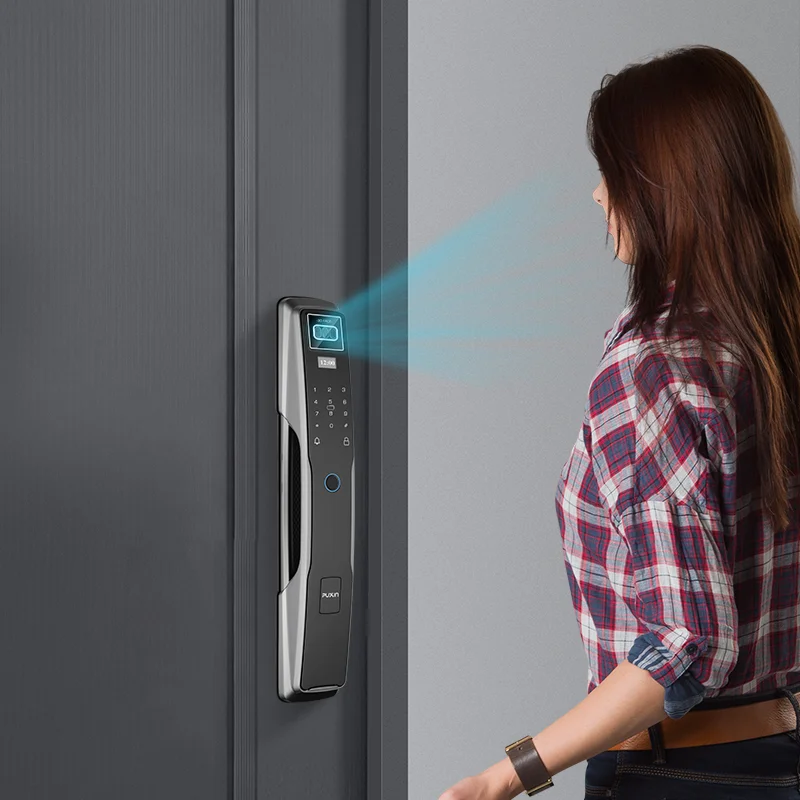
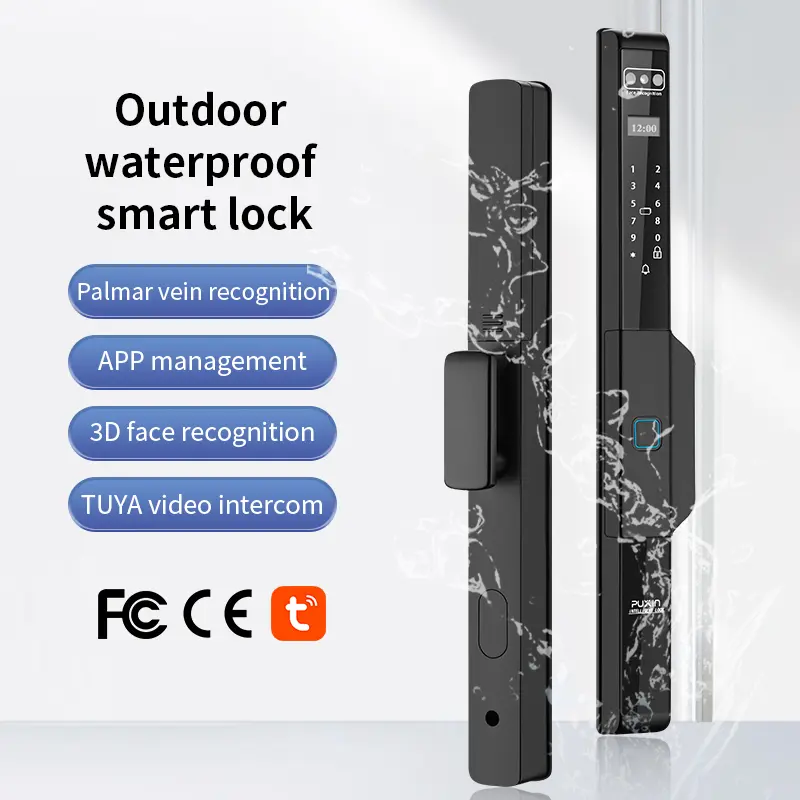
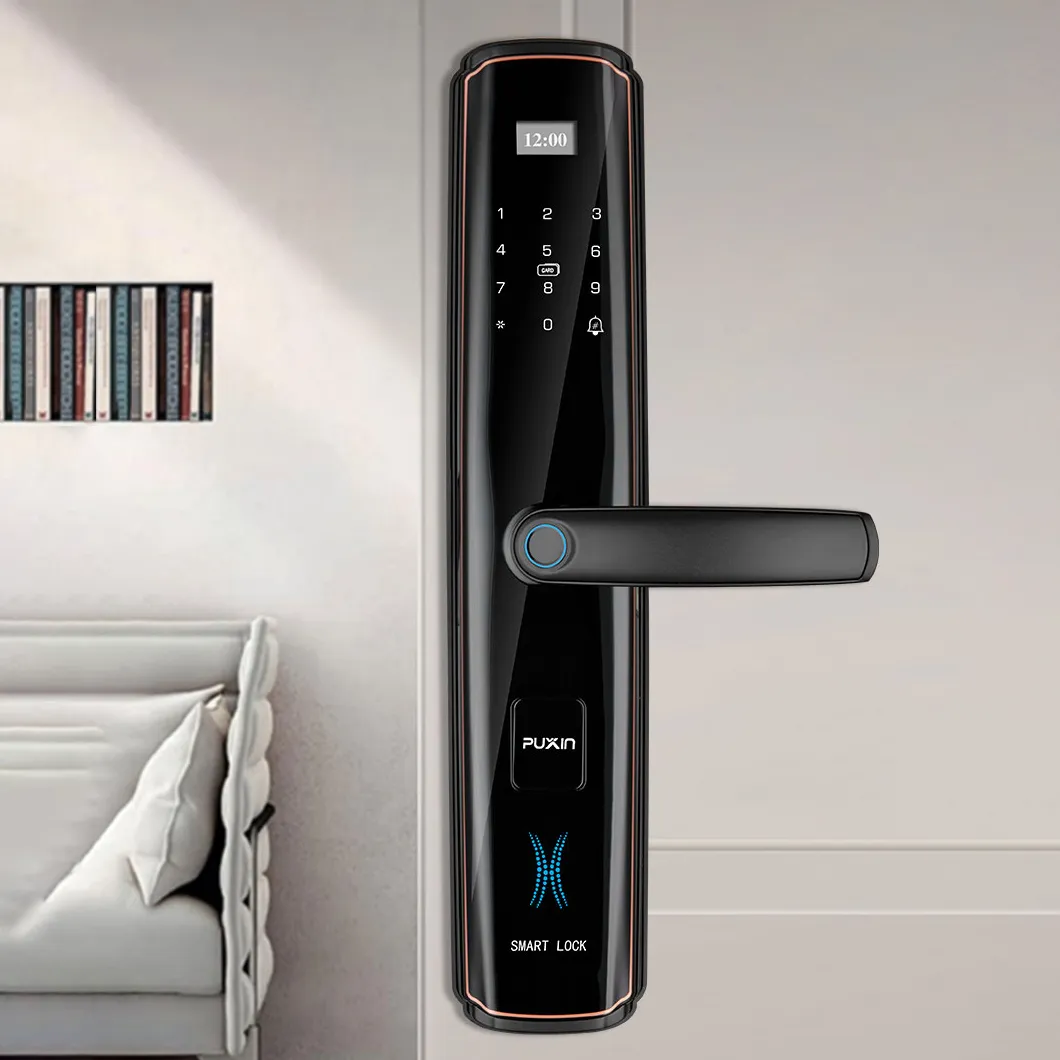
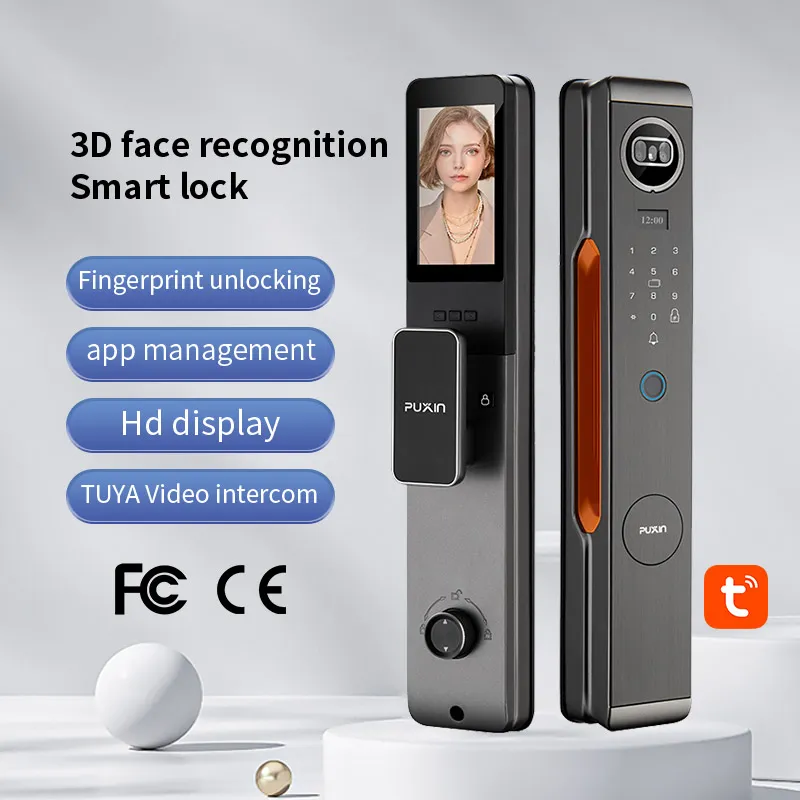
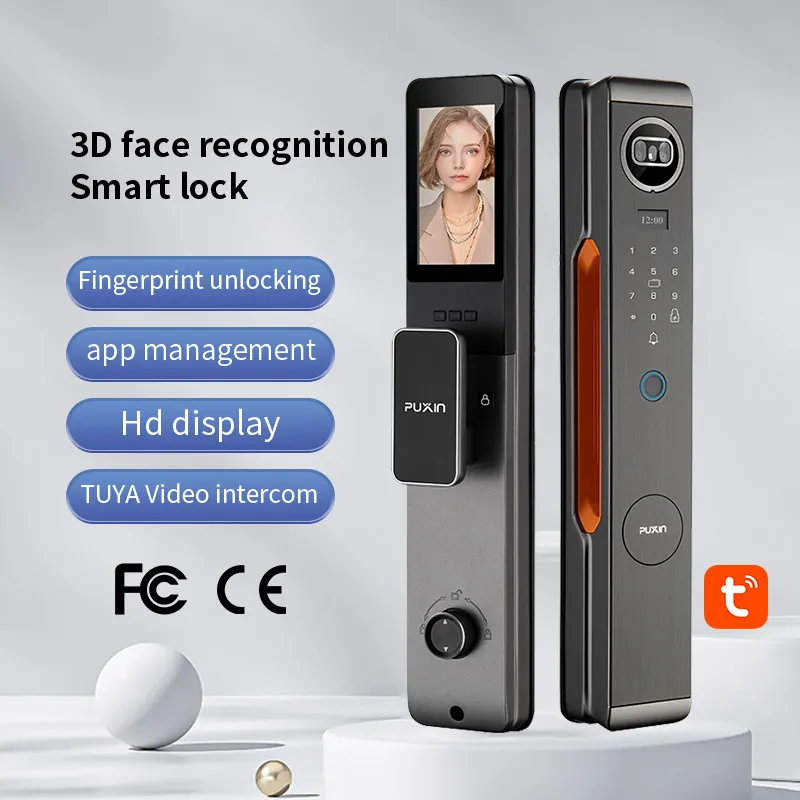
The SU 8 Fully Automatic Smart Lock from PuXin combines a minimalist integrated design with fingerprint, palm-vein, and 3D facial recognition technologies. Its interactive components are incorporated into the front panel, while a hidden Type-C emergency port provides a backup power option when the normal power supply is unavailable.
One of the practical differences between a conventional electronic lock and a fully automatic smart lock is the locking experience. Traditional locks often require the user to turn a key or operate a mechanical handle after closing the door. An automatic system can simplify this process by completing the locking operation electronically.
This is particularly useful for users who frequently enter and leave a property with their hands occupied. It can also reduce the possibility of forgetting to manually lock the door after entering.
Modern households and commercial properties may have multiple authorized users. Physical keys can be inconvenient to distribute, collect, replace, or manage when users change.
Biometric authentication provides another approach by allowing access to be associated with authorized users rather than physical keys. The appropriate authentication method should still be selected according to the property type, user group, and required security level.
| Feature | SU 8 Configuration | Practical Value |
|---|---|---|
| Product Type | Fully automatic smart lock | Supports automatic locking and unlocking |
| Fingerprint Recognition | Integrated fingerprint recognition | Provides convenient keyless access |
| Palm-Vein Recognition | Hidden palm-vein recognition area | Provides an additional biometric authentication method |
| 3D Face Recognition | Integrated 3D facial recognition | Supports hands-free access |
| Interactive Design | Integrated front-panel design | Creates a cleaner and more modern appearance |
| Welcome Light | Orange welcome lighting | Provides visual feedback during operation |
| Emergency Power | Hidden Type-C emergency port | Provides backup power when the internal battery is depleted |
| Smart-Home Compatibility | Supports smart-home integration | Can be incorporated into connected-home environments |
| Application | Residential and smart-security applications | Suitable for modern access-control requirements |
| Brand | PuXin | Smart lock manufacturer and supplier |
The SU 8 integrates several authentication technologies into one lock body, including fingerprint recognition, palm-vein recognition, and 3D facial recognition. It also features an emergency Type-C power interface and a design intended to work with modern smart-home environments.
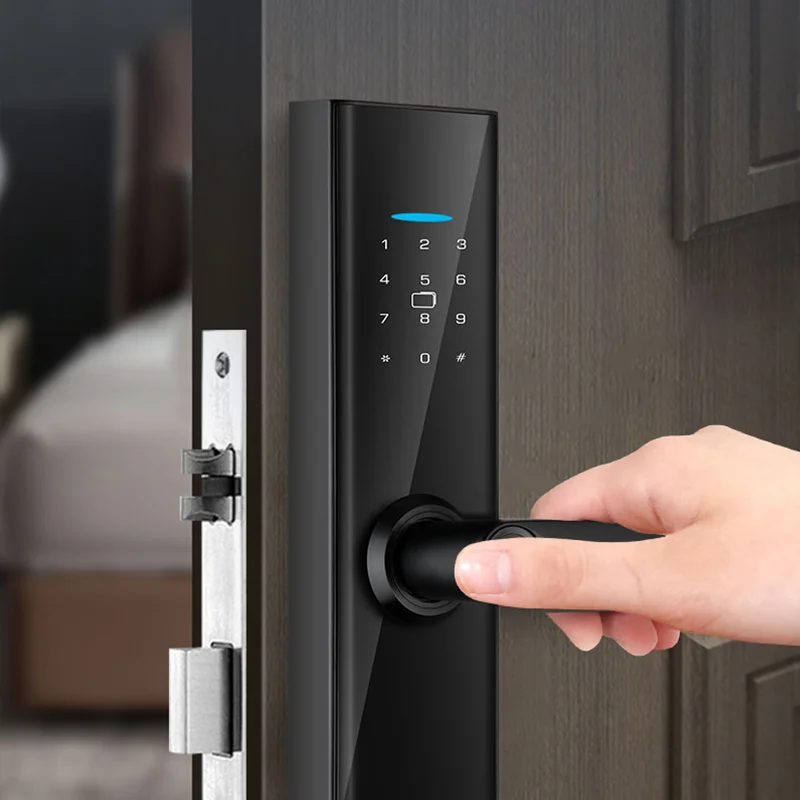
Fingerprint recognition is familiar to users of smartphones and other smart devices. Integrating fingerprint access into a door lock allows authorized users to unlock the door without carrying a physical key or entering a password.
For residential applications, this can be convenient for family members who require regular access. For commercial applications, fingerprint authentication can also provide a practical method for authorized personnel, provided the lock's user-management capacity meets the project requirements.
The SU 8 incorporates a hidden palm-vein recognition area beneath its front panel. Palm-vein technology identifies vascular patterns in the user's hand and provides an additional biometric access option.
Having multiple authentication methods can be useful when different users have different preferences or when one authentication method is temporarily inconvenient. Buyers should nevertheless evaluate recognition speed, enrollment procedures, environmental conditions, user capacity, and backup access methods before selecting a smart lock.
Facial recognition provides a hands-free access method, which can be particularly convenient when users are carrying shopping bags, packages, luggage, or other objects.
The SU 8 uses a 3D facial recognition module integrated into its front display. This design allows facial authentication to be incorporated without adding a separate external device to the door.
As with other biometric technologies, actual recognition performance can be affected by lighting, user positioning, sensor quality, software algorithms, and installation conditions. Product testing is recommended for commercial projects with specific performance requirements.
Smart locks often need to accommodate sensors, displays, fingerprint modules, cameras, indicators, and other electronic components. If these components are arranged separately, the exterior can become visually complicated.
The SU 8 integrates its fingerprint recognition area into the digital panel while placing the palm-vein recognition area beneath the panel and the 3D facial recognition module within the black screen.
This approach creates a cleaner front surface while retaining multiple authentication functions, making the lock suitable for modern residential and smart-home design concepts.
For property developers, interior designers, hotel operators, and smart-home brands, the appearance of a door lock can influence the overall visual consistency of a project.
However, appearance should not be considered separately from functionality. Buyers should also check door thickness, lock-body dimensions, installation requirements, power supply, emergency access, and compatibility with the existing door structure.
Unlike mechanical locks, electronic smart locks depend on electrical power. Even when a lock has good battery efficiency, users may eventually encounter a low-battery or depleted-battery situation.
The SU 8 includes a hidden Type-C emergency power port on the bottom of the lock. This allows an external power source to be connected when the internal battery cannot provide sufficient power for normal operation.
For homeowners, this provides a practical backup option. For installers and property managers, the emergency power procedure should be clearly explained to users during installation and handover.
Smart homes increasingly combine door locks with security cameras, lighting, alarms, sensors, and other connected devices. As a result, a smart lock is no longer necessarily an independent product.
The SU 8 is designed to support integration with smart-home systems, allowing it to become part of a broader connected living environment.
For B2B buyers, however, "smart-home compatibility" should always be verified according to the actual project. Supported applications, communication protocols, operating systems, regional versions, firmware requirements, and available functions should be confirmed before placing a bulk order.
Smart locks can provide convenient keyless entry for apartments, villas, townhouses, and other residential properties. Multiple authentication options are particularly useful for households where different users prefer different access methods.
Rental properties and managed residential buildings can benefit from electronic access solutions because physical key management becomes more complicated when occupants frequently change.
Before purchasing, property managers should confirm whether the selected smart lock provides the required user-management, access-control, and security functions.
Hotels and serviced apartments are increasingly adopting electronic access systems to improve guest convenience and simplify room access. Smart locks can also become part of a larger property-management system when the required technical integration is available.
For hospitality projects, buyers should pay particular attention to access permissions, emergency opening procedures, battery management, installation compatibility, and after-sales service.
Smart locks can also be incorporated into residential developments marketed around connected-home technology. In these projects, compatibility with other smart devices and a consistent user experience can be as important as the lock's individual functions.
Before purchasing a smart lock, buyers should provide information about the door type, door thickness, opening direction, existing mortise, lock-body dimensions, and installation structure.
A smart lock with advanced functions still needs to be mechanically compatible with the target door. Sample installation is recommended for projects involving unfamiliar door structures.
A private residence may prioritize convenience, while an office, hotel, or managed property may require more advanced user-management functions.
Buyers should therefore identify the actual access-control requirements before choosing the final configuration. Fingerprint, palm-vein, facial recognition, password, card, mechanical key, and emergency access methods may each have different roles depending on the project.
Battery type, operating duration, low-battery notification, charging requirements, emergency power, and alternative access methods should be confirmed before installation.
The Type-C emergency port of the SU 8 provides an additional backup method, but installers should still understand the complete emergency-access procedure and communicate it clearly to end users.
For distributors, property developers, smart-home brands, and security-equipment buyers, sample testing can reveal practical issues that cannot always be identified from a product specification.
During sample evaluation, buyers can check biometric recognition, locking speed, installation compatibility, front-panel appearance, battery operation, emergency power access, and integration with the intended smart-home system.
A smart lock combines mechanical components, electronic control systems, biometric sensors, power management, and software. Therefore, supplier capability should be evaluated from both manufacturing and technical perspectives.
PuXin's parent manufacturing company, Guangdong Zhengxin Intelligent Technology Co., Ltd., was established in 2003 and has manufacturing experience in mechanical locks, hardware, and intelligent locks. The company is located in Xiaolan Town, Zhongshan City, Guangdong Province, one of China's important lock manufacturing areas.
PuXin focuses on smart door lock products and provides different configurations for residential and intelligent access-control applications. Its product range covers automatic smart locks, 3D face recognition locks, video smart locks, interior door locks, and other electronic locking solutions.
PuXin positions the SU 8 as a smart security product combining automatic operation, biometric authentication, emergency power access, and minimalist industrial design.
Rather than relying on one unlocking method, the lock integrates fingerprint, palm-vein, and 3D facial recognition into a single product. This gives users more flexibility while allowing the external design to remain relatively clean and compact.
For OEM and ODM buyers, this type of multi-function architecture can also provide a foundation for developing smart access-control products for different residential, hospitality, property-management, and smart-home markets.
The development of smart access control is moving beyond simply replacing mechanical keys. Modern buyers are considering biometric authentication, automatic locking, emergency access, smart-home compatibility, installation requirements, and long-term serviceability as part of one access-control solution.
For this reason, the SU 8 Fully Automatic Smart Lock should be evaluated according to the complete application rather than individual functions in isolation. Its combination of fingerprint, palm-vein, and 3D facial recognition, integrated design, automatic operation, smart-home compatibility, and emergency Type-C power provides a broad feature set for modern access-control applications.
For property developers, smart-home integrators, distributors, and security-equipment buyers, PuXin provides a smart lock solution focused on combining biometric access with a streamlined user experience. Final product selection should be based on door compatibility, security requirements, authentication needs, smart-home integration, installation conditions, and applicable local requirements.
-